In recent years, the ICEERS team has welcomed new members from a wide variety of fields, ranging from clinical psychology and education to social research, cultural production, digital strategy, and therapeutic support. These diverse backgrounds also reflect the complexity of the initiatives the organization promotes. The challenges facing traditional medicines and the contexts in which they are used rarely belong to a single discipline: they combine scientific research, public health, community knowledge, intercultural dialogue, and reflection on public policy.
Addressing this complexity requires teams capable of navigating between different languages and forms of knowledge. For this reason, alongside research and analysis, ICEERS promotes training opportunities, offers support to people facing difficult circumstances, and facilitates international gatherings where researchers, health professionals, policymakers, and representatives of indigenous communities engage in dialogue.
Behind every report, every training program, every support initiative, and every international gathering lies a daily effort that rarely takes center stage. A large team of researchers, therapists, educators, cultural strategists, and production specialists coordinate programs, support processes, generate knowledge, and forge connections across highly diverse fields.
Some of the people we introduce below have recently joined us; others have been collaborating for some time on various programs within the organization. All bring their own backgrounds and perspectives that enrich the collective effort and help strengthen ICEERS’ mission.
Patricia Sánchez Donate
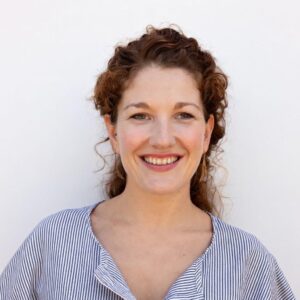
Patricia Sánchez Donate’s career revolves around a central idea: facilitating collective processes that make it possible to navigate complexity and translate values into concrete practices. Coming from the fields of social education and pedagogy, she has spent years designing and supporting learning and transformation processes in diverse contexts, with a global justice perspective that is attentive to the diversity of realities and the ethical implications of what is taught and how it is taught.
Her work is grounded in systems thinking and community building. Rather than viewing education solely as the transmission of knowledge, her processes seek to activate collective capacities, generate a shared language, and strengthen bonds among diverse actors.
Patricia joined ICEERS in 2023, focusing her work on the organization’s educational community, supporting participants, organizing communication and support systems, and enhancing the learning experience within the training programs.
She currently leads ICEERS Academy, where she drives the program’s educational and operational strategy. Under her leadership, the academy has expanded its international reach, with bilingual programs and participants from more than thirty countries. Beyond growth, her approach seeks to establish clear ethical frameworks and promote responsible practices in a particularly sensitive field.
Angie Matsuda
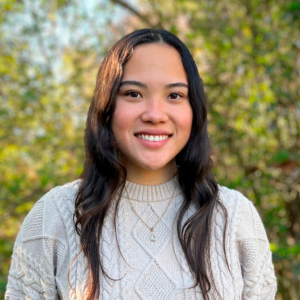
Angie Matsuda’s work lies at the intersection of the digital realm, online education, and support processes in contexts of personal transformation. She has nearly seven years of experience in digital strategy, digital project management, and web development, having collaborated on projects across various sectors and countries.
Her background includes training in graphic design and a specialization in web development, digital experience, and the management of online learning platforms. In these areas, she has participated in the structuring of training programs, educational content, and digital environments geared toward learning.
At the same time, her career has been intertwined with clinical and therapeutic training, including studies in humanistic-transpersonal psychology and psycho-spiritual support at the Institute of Psychotherapy and Spirituality in Chile, complemented by specializations in trauma, relational psychoanalysis, and the integration of experiences with traditional medicine and master plants.
At ICEERS, she participates in the management and coordination of the digital educational ecosystem, supporting the learning experience of the student community and coordinating processes related to program operations, communication, and the development of educational spaces.
Gerónimo Tejedor
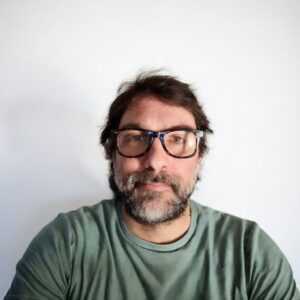
Gerónimo Tejedor is a clinical psychologist specializing in trauma, relationships, and the integration of experiences with sacred plants and psychedelics from a transdisciplinary perspective. He holds a Bachelor’s degree in Psychology from the University of Flores and a Master’s degree in Attachment, Family, and Sociocultural Diversity from the Italian Hospital University of Buenos Aires. He has supplemented his training with contemporary approaches focused on trauma processing and nervous system regulation, including EMDR and Deep Brain Reorienting (DBR).
He has over twenty years of clinical experience and fifteen years of hospital work in the child and adolescent mental health department of a national hospital in Argentina, supporting children, adolescents, and families from a relational and community-based perspective.
For ten years, he served on the steering committee of the Runa Wasi organization, a pioneering space for transcultural clinical work in Buenos Aires that developed therapeutic approaches to support processes related to Andean-Amazonian master plants.
He currently collaborates with ICEERS as a consultant and experience integrator at El Faro, where he supports individuals navigating complex processes following experiences with psychedelics and master plants from a transcultural and depathologizing perspective.
Mijal Schmidt
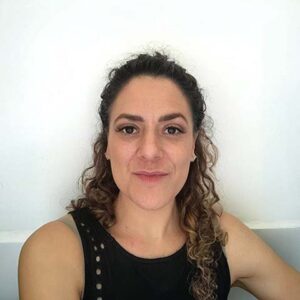
Mijal Schmidt focuses her work on clinical support and the integration of experiences with psychedelics and teacher plants, adopting an approach that bridges contemporary psychotherapy and traditional knowledge.
Her training combines clinical psychology, psychoanalysis, and musicology, with a master’s degree in musicology from the University of Amsterdam and postgraduate studies in psychoanalysis in Mexico. Her academic research has also explored the cultural and sonic dimensions of traditional medicines, analyzing the transmission of sound and the cosmological properties of ícaros, the medicinal chants associated with Amazonian traditions.
Throughout her career, she has specialized in therapeutic support and crisis intervention for individuals with complex or mixed diagnoses. She also founded and directed Lazo y Voz, an organization dedicated to clinical intervention and therapeutic support, forming and leading highly specialized transdisciplinary teams with the goal of providing care to individuals in critical states to facilitate their reintegration into society.
At ICEERS, she collaborates with El Faro, where she offers integration sessions for English-speaking individuals seeking support following experiences with ethnobotanicals. She also participates in the AyaSafety program, contributing clinical perspectives in training and dialogue settings.
Fernando Caudevilla
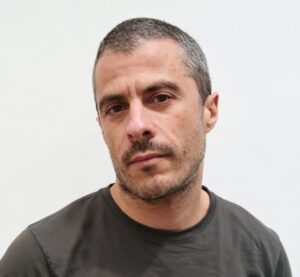
A specialist in family and community medicine, Fernando Caudevilla has a long career in the field of harm reduction and public health. For more than two decades, he collaborated with Energy Control, one of Europe’s pioneering initiatives in substance analysis and information for people who use drugs.
Many also know him as Doctor X, the pseudonym under which he has carried out extensive outreach and counseling work on drugs and health. Under this alias, he participated in international forums and online communities, providing medical information on safer substance use. His work gained particular prominence during the years of the Silk Road dark web marketplace, where he answered users’ questions about health and drugs from a harm reduction perspective.
Throughout his career, he has combined clinical practice with research, teaching, and public outreach, participating in scientific conferences and advising national and international organizations on issues related to drugs and health.
At ICEERS, he coordinates the consultation service on interactions between medications and psychoactive substances, which offers medical guidance to people who wish to understand the potential risks associated with combining pharmacological treatments with various traditional medicines.
Joshua Fouts
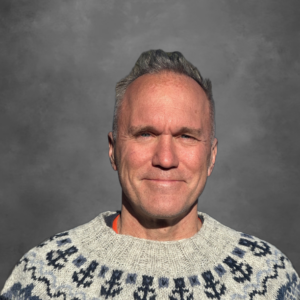
Joshua Fouts is a strategic advisor to ICEERS and co-director of the 2026 Global Ayahuasca Forum, where he co-leads this international gathering in close collaboration with the Yorenka Tasorentsi Institute.
With over twenty-five years of experience in philanthropy, systemic change, and intercultural work—including his tenure as executive director of Bioneers and his involvement in initiatives dedicated to the future of digital journalism and cultural relations—Joshua brings a wealth of experience in building bridges across diverse social and cultural spheres.
His work particularly explores the intersections between biocultural justice, Indigenous knowledge, and emerging technologies. He is also a co-founder of Tima – Ethical Connectors, an initiative dedicated to promoting ethical intercultural relations, and of Earth Codes Observatory, a project aimed at exploring the convergence of Indigenous wisdom and artificial intelligence.
Aili Pyhälä
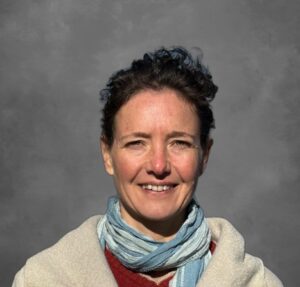
Aili Pyhälä’s lifelong commitment to biocultural diversity and the rights of Indigenous peoples has been shaped by a childhood marked by travels around the world. For more than three decades, this work has led her to collaborate with governments, indigenous communities, and civil society organizations in more than twenty-five countries, including deep, grassroots collaboration with more than a dozen indigenous nations across six continents.
She currently co-leads the 2026 Global Ayahuasca Forum and serves as a strategic advisor to ICEERS, supporting the development of international partnerships and advocacy for traditional medicines. Aili has also served on the executive committee of the ICCA Consortium and has been an adjunct professor of Global Development Studies at the University of Helsinki. Her academic work includes more than sixty publications dedicated to Indigenous knowledge, conservation, and well-being. Additionally, she has presented this research at more than fifty international conferences.
In addition to her work as a writer and educator, Aili has more than two decades of experience as a consultant, advising the Finnish Ministry for Foreign Affairs as a leading expert on participatory processes, sustainability, and human rights. She has also contributed to national sustainability programs at the interministerial level in Finland, Australia, and the Andean Community. She is a co-founder of Tima — Ethical Connectors, an initiative dedicated to fostering ethical intercultural relationships.
When she isn’t “working,” Aili finds her greatest joys in music, natural landscapes, and the simple act of foraging for wild foods.
Saioa Aresti Otxandiano
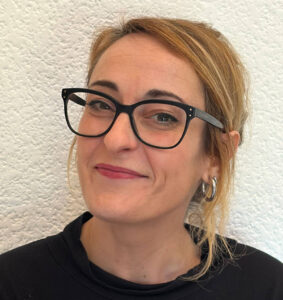
Saioa Aresti Otxandiano has built a career focused on design and production. Over the years, she has worked extensively in graphic design and event planning across various sectors, experience that brings a technical and solution-oriented perspective to the logistical management of the 2026 World Ayahuasca Forum.
Beyond her operational profile, Saioa also has significant experience working with master plants, guiding people through medicine sessions and participating in the organization of retreats and spaces for working with traditional plants.
This combination of organizational skills and direct experience in support contexts defines her work within ICEERS, where she helps coordinate the production of the World Ayahuasca Forum by integrating project management and field knowledge.
Anna Obradors i Pineda
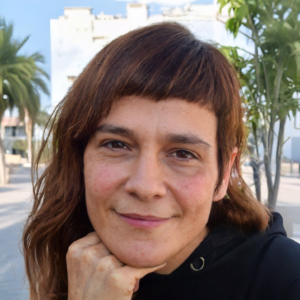
Anna Obradors i Pineda (Barcelona, 1975) holds a degree in sociology from the Autonomous University of Barcelona and a PhD in anthropology from Rovira i Virgili University. For more than a decade, she worked as a researcher in academia, focusing part of her research on cannabis policies and community-based regulatory models.
Her doctoral thesis—supervised by Oriol Romaní and co-supervised by Dr. José Carlos Bouso—analyzes the phenomenon of social cannabis clubs in Catalonia from a public health and harm reduction perspective.
In 2014, she founded WeCanna, a consulting firm dedicated to the development and management of projects related to the cannabis sector from a human rights and social justice perspective. She is currently part of the production team for the 2026 World Ayahuasca Forum, where she contributes to the organization and logistical coordination of the event.
A necessarily collective effort
In organizations like ICEERS, many of the stories that make our projects possible rarely take center stage. Behind every initiative we undertake lie personal journeys, professional decisions, and decades of accumulated learning in vastly different settings. Each person arrives with their own unique background of experiences that have left their mark in different parts of the world.
The new faces joining the organization bring that background with them. Some come from the clinical field, others from academic research, education, cultural management, or therapeutic support. Each background brings different knowledge, distinct perspectives, and life experiences shaped by diverse contexts.
When these paths converge within a single organization, something new begins to take shape. Experiences intersect, conversations expand, and novel ways emerge to address the challenges facing traditional medicines in the contemporary world. In this constant exchange—across disciplines, cultures, and professional careers—the organization’s next steps are also taking shape.
The people featured in this article are already part of this evolving story. Their journeys, now intertwined with those of our long-time team members, will help shape the initiatives, services, and partnerships that will define the years ahead. To all of them, thank you for putting your experience and dedication to work for this great family.
Photo by Zdeněk Macháček on Unsplash.