In the history of an organization, there are turning points that transform more than just the organizational chart. They rearrange responsibilities, redefine priorities, and force us to review the purpose of the path we have traveled. ICEERS is going through one of those moments. After intense years of expansion, learning, tensions, achievements, and challenges, four colleagues who have supported fundamental areas of our work with exquisite professionalism are embarking on new paths outside the daily structure of the organization: Òscar Parés, José Carlos Bouso, Constanza Sánchez Avilés, and Cristina Sánchez.
This change of stage is part of a broader process that began in 2025 with the passing of Ricard Faura, whose absence deeply affected the organization and opened a period of reconfiguration that we are still integrating.
This is not simply a transition of roles. Their departure closes a chapter that they helped to write with intelligence, commitment, and a dedication that, in many moments, transcended the conventional boundaries between work and life. ICEERS — like so many initiatives born of conviction — is not simply a non-profit organization: it functions as a laboratory, a refuge, a trench, a classroom, a support network, and a community. In its bosom, we take shelter in the warmth of a family that remains united despite its differences.
This text aims to acknowledge what each of these individuals contributed to the project, with gratitude, admiration, and respect, recognizing their sustained dedication over time. Organizations are built on ideas, but they are maintained through daily discipline, difficult decisions, and a constant presence that is not always visible.
The human bond transcends the professional sphere. We are all united by deep ties of friendship: a trust forged in complex decisions, shared fatigue, and joys that we will remember for the rest of our lives. And no transition can break that.
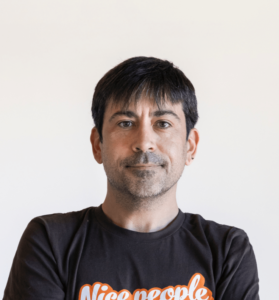
Òscar Parés: activism and social commitment
For years, Òscar has been a leading figure and a key link. His work combined drug policy analysis, risk reduction, project coordination, and institutional representation. This hybrid profile — able to engage in dialogue with activists, researchers, and public officials — was essential to the growth of ICEERS.
As deputy director, he helped translate complex debates into understandable and viable proposals. He participated in the design of regulatory contributions and in the organization of meetings that consolidated international networks. Many of these initiatives do not always make headlines, but without them, the relational infrastructure that sustains this entity would not exist today.
Òscar also played a central role as director of the World Ayahuasca Conference, a supranational event that placed ICEERS at the center of an international dialogue on ayahuasca, reciprocity, and public policy. Under his leadership, the conference brought together Indigenous, academic, professional, and community voices in a pluralistic space that marked a turning point in the organization’s global reach.
At the same time, Òscar was instrumental in promoting Cannabmed, protecting cannabis social clubs, and coordinating initiatives that took on a life of their own under the ICEERS umbrella. Projects such as the Union of Patients for the Regulation of Cannabis, Metzineres, and the Clinical Society of Endocannabinology would not be operating today without his initial impetus. He was also involved in the creation of the Red Micelio Federation, expanding the associative fabric in the field of entheogens. This ability to connect actors and turn ideas into collective structures represents an essential part of his legacy.
Òscar also contributed a pedagogical perspective. He was convinced that cultural transformation does not only occur in parliaments or scientific conferences, but also in community conversations, educational spaces, and cross-cutting alliances. His contribution leaves behind a more connected structure, a stronger commitment, and a broader community.

José Carlos Bouso: scientific rigor and responsibility
To talk about ICEERS’ scientific area is to talk about José Carlos. For years, his leadership helped consolidate a culture of research that avoided both uncritical euphoria and sensationalist alarmism. In a field where polarization dominates the debate, his contribution favored a rare position: scientific evidence without biased fanfare, communication without simplifications, and constant attention to the social implications of each finding.
Under his leadership, ICEERS strengthened lines of research on cannabis, ayahuasca, and ibogaine, promoting empirical studies that sought not only publishable results but also useful tools for professionals, legislators, and communities. The dialogue between traditional knowledge and contemporary science — as complex as it is necessary — found in his work a voice capable of building bridges between systems of knowledge without blurring the differences.
He also took on the responsibility of representing ICEERS in key institutional spaces, contributing a perspective focused on public health and rights, insisting on the need for regulatory frameworks that reduce harm and prevent new inequalities or stigmas.
Beyond articles, reports, and appearances, his legacy lies in something less visible but more enduring: an ethic of rigor. The conviction that research implies responsibility to the people whose lives are affected by the information we disseminate. In this new stage, Dr. Bouso will continue to collaborate with ICEERS from another place, keeping alive the scientific dialogue he helped to consolidate. The form changes, but the bond remains.

Constanza Sánchez Avilés: humanity, politics, and rights
If science provides data, politics decides destinies. Constanza helped ICEERS keep sight of that dimension. From the area of Law, Public Policy, and Human Rights, she contributed a strategic and deeply legal perspective, anchored in the defense of individuals against disproportionate punitive frameworks.
Her work was not limited to analyzing regulations. She focused on examining how policies impact real lives: which people are excluded, who is criminalized, who has access to health care, and who does not. This sensitivity translated into reports, regulatory proposals, and advocacy spaces where ICEERS was able to engage in dialogue with institutions from a solid, balanced, and well-argued basis.
Constanza embodied something essential to our organizational culture: conceptual precision. Her work helped refine ICEERS’ legal and political analysis, bringing technical depth and clarity to complex debates that require peripheral vision. In a field fraught with labels and simplifications, her contribution fostered a focus on the real consequences that policies have on citizens. This approach — centered on people as subjects of rights — shaped documents, positions, and internal conversations.
Her contribution leaves a mark on the way ICEERS approaches any regulatory debate: with technical depth and humanity.

Cristina Sánchez: cross-cutting strategy and culture of care
Not all contributions are measured in publications or appearances. Some translate into accompanied silences, calls answered at odd hours, long processes where the priority is to offer a beacon of light to guide people through the darkness.
Cristina played a key role in strengthening the El Faro Support Center, a space that since 2013 has offered guidance and support to people going through challenging processes after experiences with psychoactive plants. This work requires listening, containment, and a deep understanding of the psychological, cultural, and social dimensions of these experiences.
Cannabmed also bore her mark. Under her coordination, the project established itself as a space for rigorous information and analysis on medical cannabis at a time when public debate demanded greater clarity and substance. Cristina helped to give it structure, coherence, and visibility, strengthening its capacity to engage in dialogue with patients, professionals, and public officials based on criteria of quality and responsibility.
Through her leadership and together with a committed team, El Faro expanded its response capacity and systematized lessons learned that are now part of ICEERS’ collective knowledge. In a global context where access to these practices is diversifying and delocalizing, having a responsible support mechanism is not an accessory detail: it represents an ethical commitment.
At the same time, Cristina participated in educational projects and comparative information tools, helping to make access to resources on legal frameworks and risk reduction more transparent, accessible, and user-friendly. Her legacy is inscribed in the culture of care. In the certainty that promoting information also means accompanying its consequences.
Shared memory
ICEERS was born out of a simple yet ambitious intuition: to generate evidence, promote public policies that respect human rights, and offer responsible support in contexts where information was scarce and stigmatization was rampant. Turning that intuition into an organization with international impact required years of disciplined work.
José Carlos, Constanza, Cristina, and Òscar were central to that process. They experienced moments of expansion and periods of uncertainty. They accompanied challenging internal debates with their presence, actively contributed to strategic decisions, and celebrated collective achievements with the team. They helped professionalize structures without losing the critical and conciliatory spirit that gave rise to this journey.
Today, our siblings are leaving the family nest and setting out on new paths. ICEERS, for its part, is facing a new stage of leadership and consolidation. The best tribute we can offer them is to keep their legacy alive and honor the principles they helped embody: rigor, rights, care, and community.
To each of them, thank you for your time, energy, and trust. Organizations change form. What remains — when the work has been done with integrity — transcends any organizational chart. You will always have a special place in our hearts.
We wish you broad horizons, fruitful projects, and the joy of continuing to grow in freedom. May everything you undertake expand your horizons and propel you as far as you wish to go. You will always find your home here.
The cycle closes with gratitude. The project continues with conviction. Let’s keep going!