
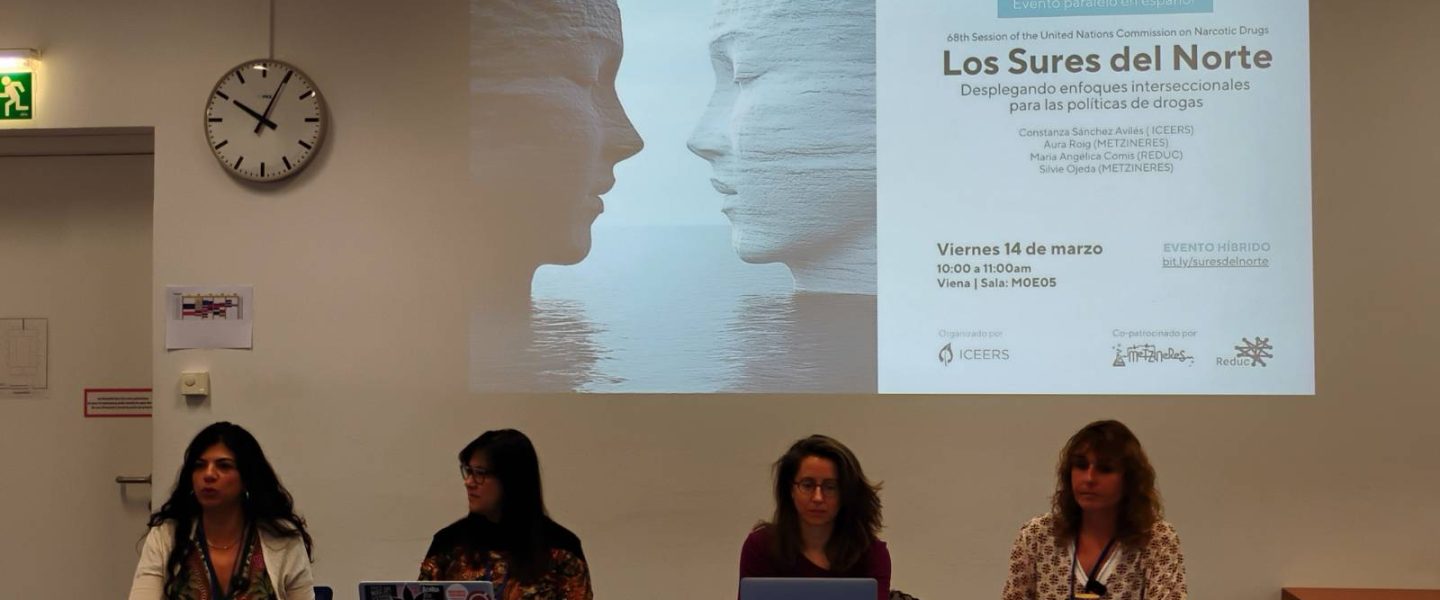
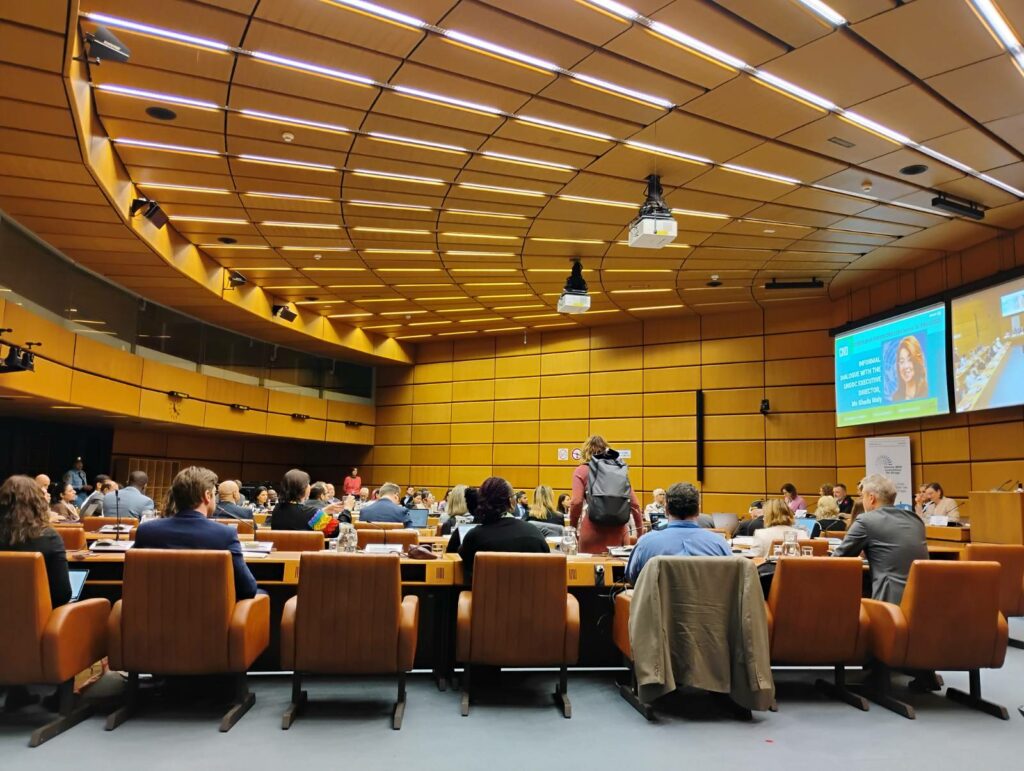
The 68th session of the United Nations Commission on Narcotic Drugs (CND) took place between March 10th and 14th. An event in which governments, international organizations and civil society meet to review and follow up on the international drug control treaties, outline drug policy guidelines, and share new challenges and opportunities. ICEERS was once again able to participate in this space as an organizer and co-organizer of various side events, as well as making our contributions in several informal dialogues. Each CND session is an opportunity to showcase the work we do on the ground, and an opportunity to contribute to the global debate, providing data based on practice and reality, and helping to balance the more generalized, abstract and fragmented nature of the political debate that underpins the decision-making during those days.
Despite the progress made, many issues remain blocked by the punitive and prohibitionist approach that still prevails in the Commission on Narcotic Drugs and other related bodies. However, in recent years small cracks have opened up in the system, especially in relation to the recognition of the cultural and medicinal value of the coca leaf and the incorporation of harm reduction strategies in drug policies. A hopeful example of this CND edition has been the approval of the resolution promoted by Colombia, which requests the creation of a group of experts to review the current international control system. This step constitutes an explicit recognition of the need for structural transformation and the urgency of integrating more inclusive and realistic perspectives in decision-making on a global scale.
Dialogues for transformation
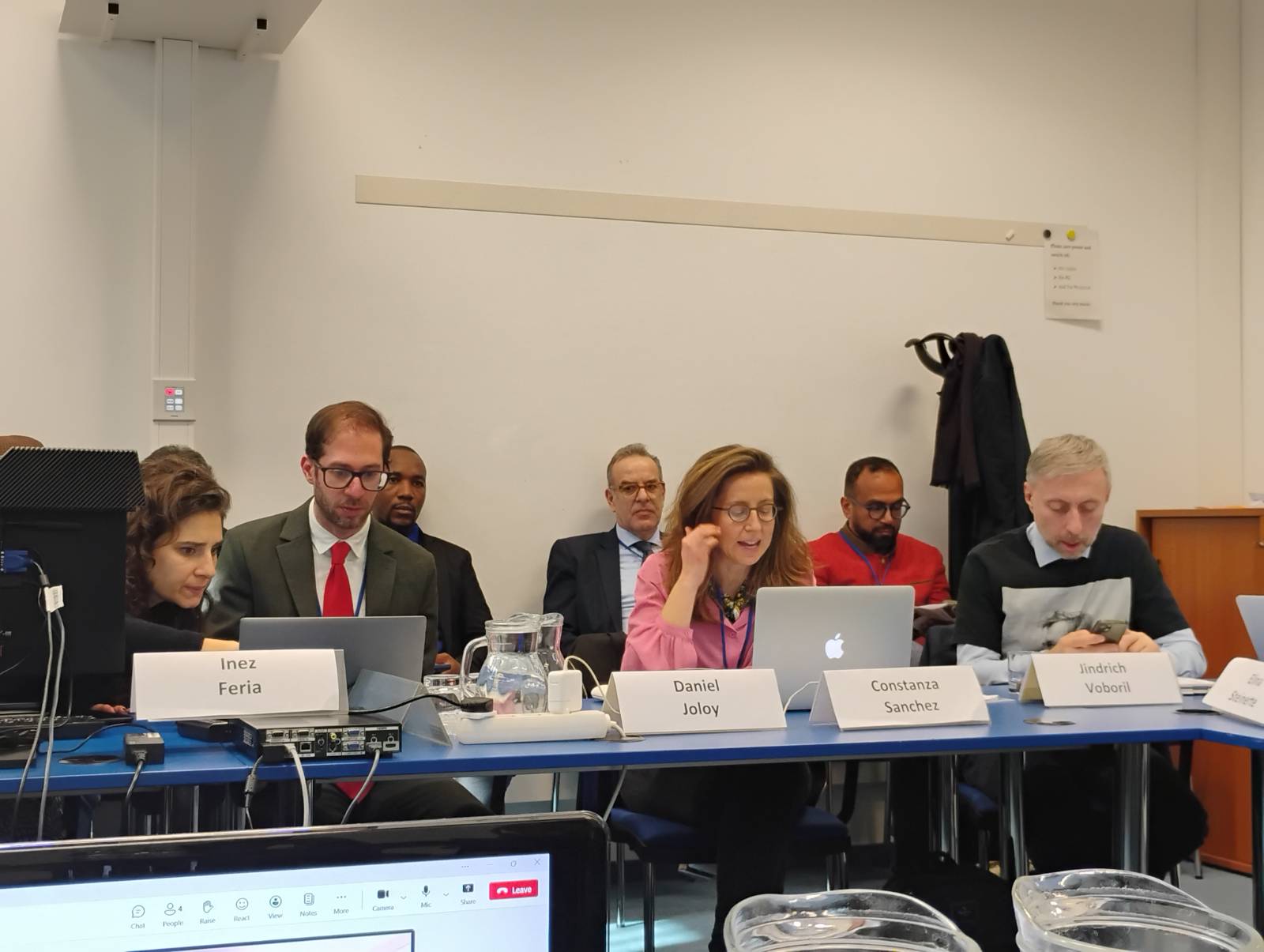
On Tuesday March 11, ICEERS co-sponsored an event, led by TNI, entitled “The Coca Leaf in the UN Treaty System: A Pending Issue,” in which OHCHR and IDPC also participated. Hernán Vales, Head of the Indigenous Peoples and Minorities Section of the OHCHR, Senator Julio César Estrada of Colombia, Pedro Arenas (Viso Mutop), Estela Ramos (Bolivia) and Ricardo Soberón (Peru) shared various impressions from their territories on the process of reclassification of the coca leaf that is currently taking place in the World Health Organization. On Thursday, March 13, Constanza Sánchez participated in the side event “Breaking the Cycle of Impunity: Improving Efforts to Ensure Human Rights Compliance in Drug Policies,” organized by Amnesty International and co-sponsored by ICEERS, OHCHR, IDPC, IHRA, NoBox, Di-Sentir AC and the governments of Switzerland, the Czech Republic, Colombia and Brazil. Our Director of Law, Policy and Human Rights shared ADF’s experience in supporting the defense of people prosecuted for their relationship with traditional plants, with a closer look at the cases of coca leaf that have been supported in Spain. Jindrich Voboril (Czech Republic), Inez Feria of NoBox Philippines and Elina Steinerte of the Subcommittee on the Prevention of Torture also participated in the event.