
Fifty-five years after its adoption, the 1971 United Nations Convention on Psychotropic Substances continues to function as the backbone of the international regime that restricts access to compounds such as DMT, psilocybin, and mescaline. Most national legislation, clinical research frameworks, and, by extension, the line that separates people who work with traditional medicines from those operating in legitimate channels rest on this architecture.
A recent study, published in Contemporary Drug Problems, reconstructs the diplomatic process that placed these compounds on the strictest rung of control. Its conclusion, far from minor, exposes that the decisive factor was not pharmacological evidence but a combination of media-driven panic, Cold War geopolitical loyalties, and the absence of economic defenders. From the everyday work of those of us who accompany communities and individuals engaged with traditional medicines such as ayahuasca or psilocybin mushrooms, the finding does not surprise. On the contrary, it confirms a long-shared intuition and offers, in addition, a documented genealogy of how a legal regime was consolidated that never accounted for the affected peoples.
A treaty that excludes those who safeguard the medicines
The study, authored by Måns Bergkvist, Damon Barrett, Johan Edman, and Björn Johnson—researchers affiliated with the universities of Uppsala, Gothenburg, and Lund—reviewed thousands of documents from the United Nations archive, the Swedish national archive, and the U.S. national archive to trace the path leading to the 1971 Vienna Conference. What emerges does not fit the official narrative. In statements to PsyPost, Bergkvist sums up the dynamic bluntly: “the agreement on the need for the most severe control measures for psychedelics turned out to be so decisive that their actual risks, let alone their therapeutic potentialities, were never seriously considered.”
The pharmacological knowledge available in the 1960s fell short of justifying the classification: studies did not point to significant addictive potential, and when serious cases of harm were debated, causality was usually difficult to establish. The British rapporteur of the Ad Hoc Committee on Substances Not Under International Control, established by the Commission on Narcotic Drugs (CND) in 1965, acknowledged a year later that its members, quoting the minutes verbatim, “had assumed that all [psychedelics] should be treated as dangerous until otherwise advised.” A notable inversion of the burden of proof.
It is worth underscoring what that genealogy does not include. In the rooms where the international classification of DMT, psilocybin, and mescaline was decided, there was no representation of the Amazonian peoples who have worked with ayahuasca for centuries, nor of the Mesoamerican communities with ceremonial continuity around mushrooms, nor of the Andean peoples who safeguarded the coca leaf. The absence is not coincidental: the system was built without anticipating a place for that knowledge. It is the same logic that the International Drug Policy Consortium denounced when it recalled that “Indigenous peoples did not participate in the negotiations of the 1961 Single Convention on Narcotic Drugs,” which placed access to the coca leaf on Schedule I as a result of the 1950 ECOSOC Commission of Enquiry report, a document that years later would be acknowledged as steeped in colonial and racist prejudice.
The analysis by Bergkvist and colleagues fits within a broader critical tradition. Damon Barrett, co-author of the study and director of the International Centre on Human Rights and Drug Policy, had been pointing out for years that, for those on the front lines of the international regime, “including Indigenous peoples, peasants, people who use drugs, and service providers, the UN drug control system is perceived as a significant part of the problem rather than part of the solution.” The 2026 study provides the documentary basis that grounds that perception in the organization’s own archives.
Moral panic, counterculture, and the press as amplifier
The mechanism by which access to psychedelics moved from a marginal issue to a top priority between 1963 and 1966 deserves close attention. In the archives, the press appears time and again as the decisive catalyst. LSD was first mentioned at the Commission on Narcotic Drugs in 1963, when the French chair of the session noted that he “had read in the press” that the substance was being used in problematic ways. From there, media coverage — centered on alleged chromosomal damage, sudden psychoses, and a youth epidemic spinning out of control — fed a diplomatic discourse that the study’s authors identify, with sociological rigor, as moral panic: a situation in which the political reaction becomes disproportionate to the available evidence.
That dynamic does not operate solely on chemistry. When the U.S. delegation in Vienna stated that psychedelic use was influencing student protesters and that “the public, accordingly, was alarmed,” it confessed something the study documents extensively: in the UN negotiations these compounds were presented not only as a public health risk but also as a social threat tied to the questioning of authority, declines in productivity, and the erosion of order. David Nutt, president of Drug Science and former chief drugs adviser to the British government, put it precisely: “psychedelics were banned in the 1960s not because they were dangerous, but for political reasons. When LSD got out of the laboratory and the therapy rooms, the youth movement it fuelled was opposing the status quo and changing the way young people were thinking, particularly about being drafted to fight in Vietnam.” Decades later, that same impulse to penalize cultural practices perceived as disruptive would shift easily toward Indigenous traditions when the globalization of ayahuasca, or the growing visibility of other medicines, brought their communities under the gaze of “control” bodies.
Cold War, interests, and political orphanhood
The archival analysis adds two factors that rarely appear in popular accounts. The first, bipolar logic. Eastern bloc countries framed drug use as a symptom of capitalist decay. Western countries, meanwhile, framed it as a matter of public health and social order. Both frames, seemingly incompatible, converged comfortably on the same conclusion: more “control.” A 1972 U.S. Department of Justice report found that international negotiations were heavily conditioned by bloc politics, with votes that reflected geopolitical loyalties more than technical considerations.
The second factor, of an economic order, is more revealing. Amphetamines and barbiturates enjoyed the active protection of the Western pharmaceutical industry, which had a vested interest in blocking controls that could affect its business. Psychedelics, by contrast, lacked equivalent patrons: the LSD patent had expired, commercial interest had thinned, and plant-based psychedelics were difficult to patent. This economic orphanhood, combined with their symbolic charge and alarmist treatment in the media, turned access to these substances, in the words of the study’s own authors, into “a good enemy”: vulnerable, unpopular, and without the means to defend itself. Traditional medicines do not have lobbies, but neither do the communities that safeguard them have anyone speaking for them in multilateral forums. In a negotiation governed by industrial and geopolitical interests, that double absence translates into legal vulnerability.
The small victory that sustains the traditions today
The outcome of the process contains, however, a nuance that the dominant narrative tends to omit and that proves decisive for understanding the current status of practices involving ayahuasca and other traditional preparations. The United States, usually portrayed as the seed of prohibition, played an ambivalent role in Vienna. Its delegation, personally appointed by the Nixon administration, pushed to preserve a space for scientific research and argued, alongside Mexico and Australia, that plants containing compounds that may induce psychoactive states should fall outside the Convention’s reach. Faced with the more restrictive French and Soviet proposals, that bloc managed to introduce Article 32.4, which allows States to enter reservations regarding wild plants “traditionally used by certain small, clearly determined groups in magical or religious rites.” Bergkvist qualifies a common misconception: “it is commonly perceived, perhaps, that the United States exported the prohibition of psychedelics globally, more or less by force, through the Convention on Psychotropic Substances. However, the United States was one of the least visible actors in the development of the prohibition, except in ensuring that clinical research was protected and that the treaty did not affect the use of plants for religious purposes.”
That apparently technical nuance today underpins much of the legal framework that protects ceremonial practices. The 1971 Convention “controls” practices involving DMT, psilocybin, and mescaline as isolated compounds, but its official Commentary expressly clarifies that the plants containing them are not on the schedules and are not covered by the treaty. The International Narcotics Control Board confirmed this interpretation in 2001 in response to a query from the Dutch government, and reiterated it on the occasion of the broader 2010 consultation: neither access to ayahuasca, in any of the forms in which the various traditions prepare it, nor access to psilocybin mushrooms or mescaline-containing cacti falls under international control.
A precision worth making about the two main conventions. The 1961 Single Convention on Narcotic Drugs does nominally include three plants in its schedules—the opium poppy, the coca plant, and cannabis—and requires States Parties to place their use by people under the strictest regime. The 1971 Convention, by contrast, limits access to isolated compounds such as DMT, psilocybin, and mescaline, but leaves the plants that contain them outside the treaty. That distinction, which some accounts overlook, shapes the current legal situation of traditional medicines that are neither opium, nor coca, nor cannabis: practices involving ayahuasca, psilocybin mushrooms, and mescaline-containing cacti are not regulated by the international regime, even though different States have chosen to restrict them at the national level through interpretive routes.
This distinction between isolated compound and plant material, as Kenneth Tupper and Bia Labate documented in a landmark paper published in Human Rights and Drugs, is no technicality: it is the only international legal margin that today sustains the continuity of many ceremonial practices. In 2012 the authors dismantled the Board’s recommendations when it sought to extend its reach to plants, arguing that the body “conflated and thus misrepresented broadly diverse plant materials and their effects, failed to distinguish between ‘use’ and ‘abuse’ of substances that may induce psychoactive states, and seemed to assume that certain elements of culture, specifically traditions involving the use of such substances, are or should be static, eternally frozen in time and space.” The observation is key: the international regime presupposes cultures held still, unable to adapt or globalize, and penalizes everything that escapes that fixed image.
Historical errors left unresolved
It would be tempting to treat this story as an anomaly of the past if the current regime had been reformed in line with present-day knowledge. It has not been. In October 2025, the World Health Organization’s Expert Committee on Drug Dependence concluded its critical review of the coca leaf with a recommendation that surprised Indigenous communities, civil society, and advocates of evidence-based policy: keep access to the coca leaf on Schedule I of the 1961 Single Convention. Paradoxically, the committee’s own technical report acknowledges that the literature reviewed “does not reveal evidence of clinically relevant harm to public health associated with traditional use of the coca leaf,” and recognizes its cultural importance and therapeutic potential. The decision is justified by invoking the criterion of “convertibility”: the ease with which the leaf’s alkaloids can be extracted to produce cocaine.
Martin Jelsma, director of the Drugs and Democracy program at the Transnational Institute and one of the leading voices on the colonial genealogy of the regime, puts it bluntly: “it is unacceptable for the WHO simply to say that coca has to remain in Schedule I because cocaine can be extracted from the leaf.” The institute’s analysis goes further and denounces what many civil society voices had been warning: “after thousands of years of accumulated Indigenous knowledge about coca, this conclusion reveals an almost insulting denial of the relevance of Indigenous knowledge in the WHO review process.”
ICEERS’ own analysis of this decision links it to the broader genealogy of the regime: the outcome “transcends technical considerations. For wide academic, community, and institutional sectors, the decision represents a missed opportunity to repair a historical harm: the international criminalization of practices involving a plant with traditional, cultural, and medicinal uses deeply rooted in the Andean-Amazonian region, incorporated into the international regulatory framework of ‘controlled substances’ in a context marked by colonialism and the exclusion of the directly affected communities.”
The consequence of this inertia does not stay in the abstract realm of international law. It translates into concrete biographies. In October 2022, a Peruvian citizen with a high-risk pregnancy was detained at Cancún airport for carrying 2.5 kilos of coca leaf prescribed by her obstetrician as a nutritional supplement. She spent days in a penitentiary that housed people convicted of murder, robbery, and rape. A mamo of the Kogi people, a spiritual authority of the Sierra Nevada de Santa Marta, was arrested in Madrid while traveling to visit relatives living in Spain with 4.5 kilos of coca intended for ceremonial practices. After more than a year of house arrest, far from his community and his territory, the case was dismissed thanks to the expert work of the Ayahuasca Defense Fund, led by ICEERS, and the support of the lawyer Diego de las Casas, who recently passed away. These are not edge cases or administrative exceptions: they happen as the foreseeable result of applying, with formal rigidity, a system built without considering the very existence of the practices it now criminalizes.
The voice of the safeguarding peoples
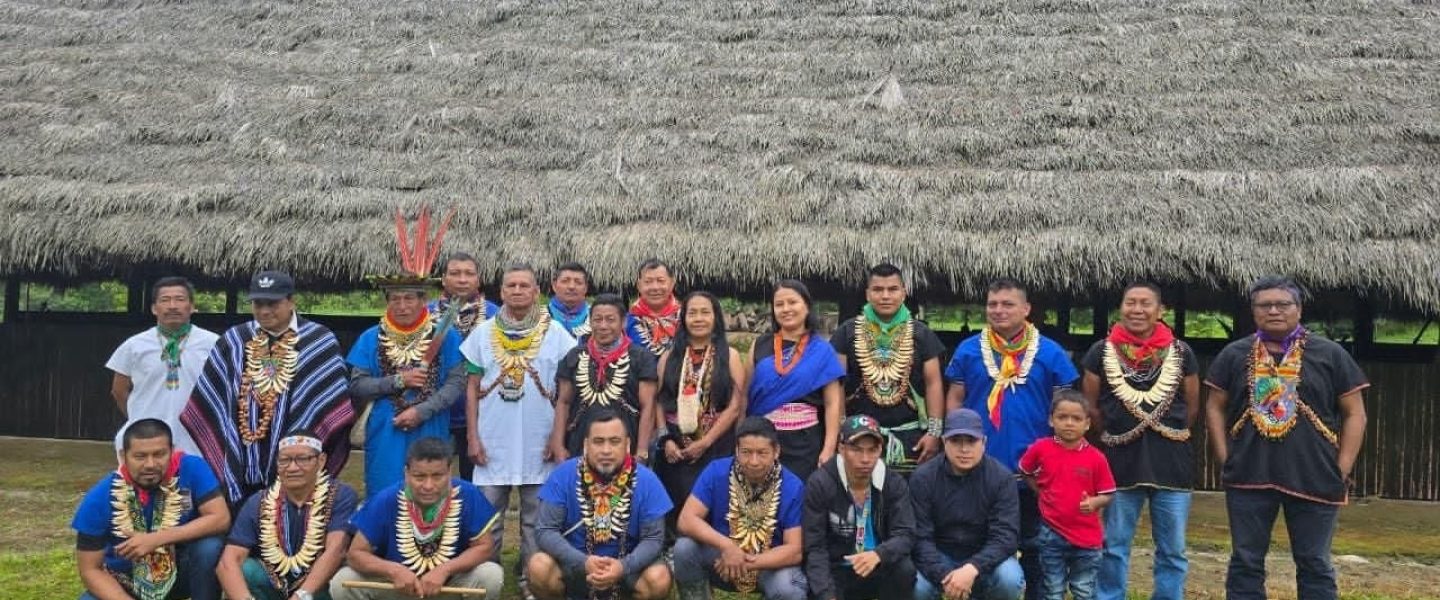
Those who safeguard these medicines have spent decades making their position heard, often without response. The Union of Indigenous Yagé Medics of the Colombian Amazon (UMIYAC), which brings together the spiritual authorities of the Siona, Inga, Cofán, Kamëntsá, and Coreguaje peoples, formulated as early as the Yurayaco Declaration a warning that remains current: “there are those who take our seeds in order to patent them, to appropriate them. Others want to declare yagé a narcotic plant and ban its use for the good of humanity.” The same organization has denounced in recent years how colonization has sought for centuries to “erase our sacred connections with nature, criminalize our spiritual ceremonies, and mock our botanical science.” The international regime of access control, by action or omission, prolongs that history.
What Indigenous voices articulate is far from marginal. It coincides, to a great extent, with what international law already recognizes. The United Nations Declaration on the Rights of Indigenous Peoples (2007) recognizes the right of Indigenous Peoples to maintain, protect, and develop their spiritual traditions, their knowledge, and their traditional medicines. The contradiction between that human rights framework and the architecture of “drug control,” inherited from the 1960s and shielded from any substantive reform, constitutes one of the great unresolved conflicts of the contemporary multilateral system.
Returning the voice to those never heard
What remains unresolved, more than half a century after the system was built without them, has to do with method: how does one rebuild a debate from which the safeguarding peoples were excluded at the outset? The answer admits no diplomatic shortcuts, but it does admit concrete attempts. One of the most significant in this moment is being prepared in Girona from September 11 to 13, 2026. The World Ayahuasca Forum, organized by the Yorenka Tasorentsi Institute, the Nixiwaka Institute, and ICEERS, will be the first international gathering of its kind led entirely by Indigenous peoples. A delegation of spiritual authorities will travel from their territories to meet with researchers, health professionals, jurists, artists, and facilitators in a space of intercultural dialogue with real capacity to influence the future of traditional medicines.
The reversal of order matters. In the rooms of the Commission on Narcotic Drugs in the 1960s, the safeguarding peoples figured, at best, as objects of discussion: traditions that some delegations considered worthy of exception and others proposed outright to “eradicate.” In Girona, the direction of the exchange is reversed. The spiritual authorities are not coming to explain their practices before a technical forum that will decide on them, but to articulate the conversation from their own frame of reference, on equal footing with the Western disciplines that approach these medicines with curiosity, respect, or scientific instruments. Ancestral knowledge ceases to be treated as protected folklore and begins to operate as an interlocutor.
Gatherings of this nature do not, by themselves, resolve the inertia of the international regime. But they open cracks in an architecture that for decades operated under the assumption that dialogue between forms of knowledge was unnecessary or impossible. If the study by Bergkvist and colleagues demonstrates anything, it is that the decisions that now weigh on entire communities were made in the absence of the people most affected. Beginning to correct that absence requires spaces where the conversation can finally take place under conditions that do not reproduce the original hierarchy. The Girona Forum aspires, modestly, to become one of them.
Responsibility and horizon
Recognizing the historical fragility of the regime is not the same as calling for its outright dismantling. It does, however, require any serious discussion of reform to begin from an honest diagnosis. The peoples and communities that have safeguarded these medicines have the right for that accumulated knowledge to count in the forums where decisions are made about their practices, and for the international instruments that protect their rights to stop operating as a sealed compartment vis-à-vis the international regime of access control. Contemporary scientific research, for its part, has the right to develop without the obstacles derived from a classification whose foundations never rested on solid evidence.
From ICEERS, which for over a decade has accompanied people and communities facing legal proceedings linked to work with traditional medicines, this historical review offers more than academic context. It offers arguments. It names the sense that the system invoked against these people responds neither to science nor to public health nor to human rights, but to a concrete genealogy of panics, loyalties, and interests. Understanding how that regime was built is the first step toward demanding that its continuity stop being treated as a natural fact of the international order and start being considered, at last, a political decision open to revision.
Photo by UMIYAC.