

Jesús Alonso Olamendi | January 28, 2026
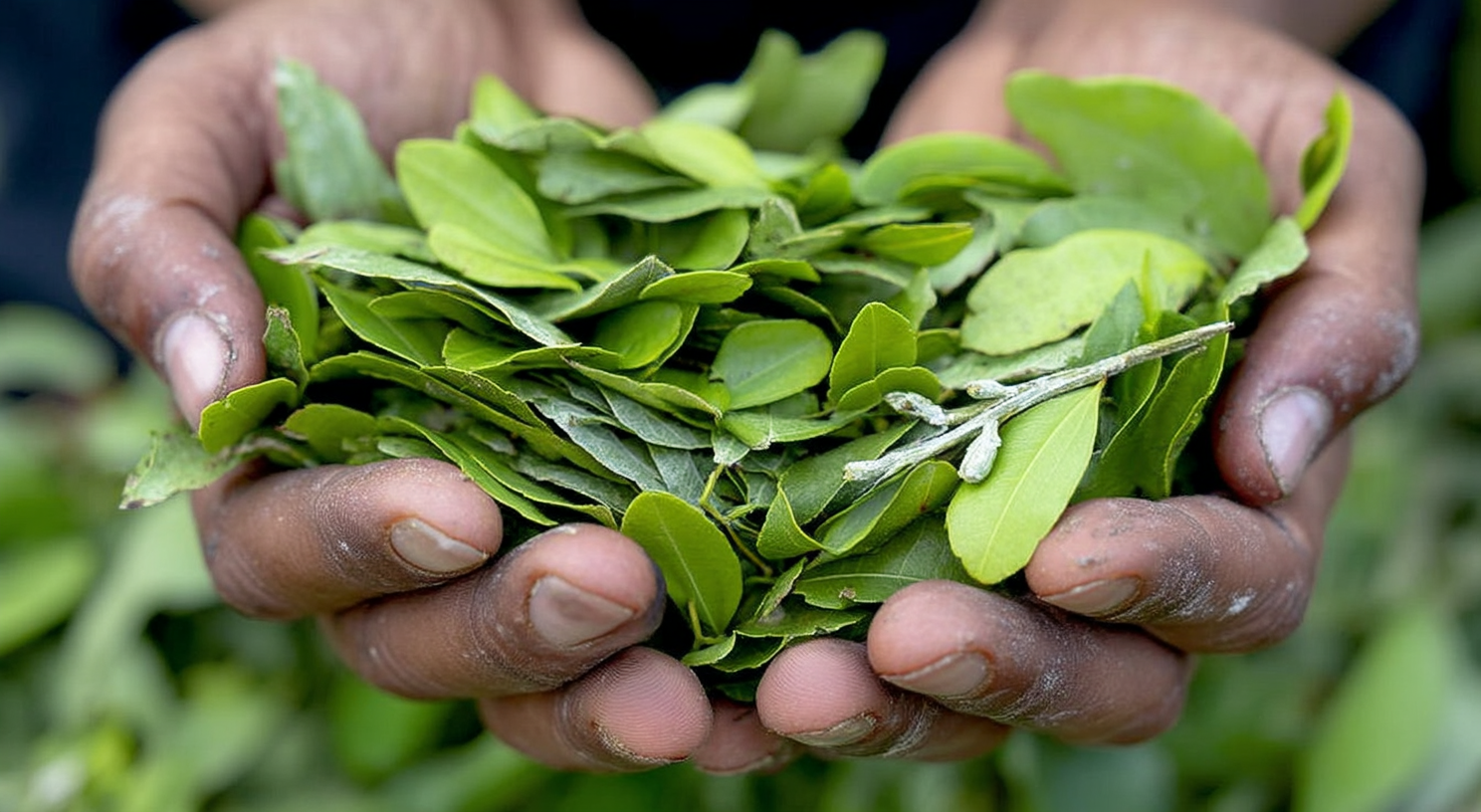
The World Health Organization (WHO), through its Expert Committee on Drug Dependence (ECDD), concluded its 48th meeting in October 2025 with a critical review of the international classification of the coca leaf. Contrary to the expectations of Indigenous communities, civil society organizations, and advocates of evidence-based policies, the WHO recommended keeping coca leaf on Schedule I of the 1961 Single Convention, the most restrictive category in the international drug control system.
As ICEERS has pointed out in its analysis of this process, the outcome “transcends technical considerations. For broad academic, community, and institutional sectors, the decision represents a missed opportunity to repair historical damage: the international criminalization of a plant with traditional, cultural, and medicinal uses deeply rooted in the Andean-Amazonian region, incorporated into the global drug regime in a context marked by colonialism and the exclusion of the communities directly affected.”
Paradoxically, the WHO’s own technical report acknowledges that the traditional use of coca leaves (chewed or infused) does not pose a serious risk to public health and highlights their cultural importance and therapeutic potential for indigenous peoples. However, the decision to keep it banned was based on “convertibility” criteria: the supposed ease with which its alkaloids can be extracted to produce cocaine, coupled with the context of a global increase in the production of this substance.
Despite the low risk, the ban continues
The technical report supporting the critical review offers a more complex reading than the final result suggests. In the section on public health, the review concludes that the literature examined “reveals no evidence of clinically relevant harm to public health associated with the traditional use of the coca leaf.” At the same time, the document acknowledges the existence of substantial impacts linked to the control policies historically applied to coca.
Despite these findings, the committee decided to keep the coca leaf under strict international control. The main reason given was that it meets the convertibility criterion established by the treaties: the committee emphasizes that the leaf contains cocaine as a natural alkaloid and that its extraction and refinement can be carried out through processes considered straightforward and accessible.
The continuation of the international ban on coca leaves has repercussions that go beyond the prevention of addiction. From a comprehensive health perspective—which includes social, cultural, legal, and psychological well-being—the collateral damage of this prohibitionist policy is significant.
Consequences of prohibition: beyond physical health
The coca leaf is a sacred plant and a central element in the cultural life of many Andean and Amazonian peoples. Criminalizing it stigmatizes the communities that have used it for generations, eroding cultural identities and healthy community practices.
Furthermore, the legal equating of the coca leaf with dangerous drugs gives rise to disproportionate legal proceedings against individuals whose “crime” consists of possessing or using leaves for personal, medicinal, or ritual purposes.
ICEERS has extensively documented the consequences of the criminalization of the coca leaf on specific individuals and has directly accompanied, through the Ayahuasca Defense Fund (ADF), processes in different countries that illustrate the disproportionate impacts generated in different geographical contexts. Below are some of the cases we have supported over the past decade that highlight the disproportionate impacts of its current legal status.
Case 1: Criminalized maternal health
A 39-year-old Peruvian citizen was arrested in October 2022 at Cancun International Airport for carrying coca leaves in her luggage. What dramatically distinguishes this case from a typical drug trafficking case is its medical context, as this citizen was undergoing a high-risk pregnancy and her obstetrician in Peru had prescribed these traditional products as a nutritional supplement for her treatment.
Upon arriving in Mexico, she was unaware that carrying coca leaves was illegal in the country. The products she was carrying, approximately 2.5 kilograms of leaves, were packaged and had Peruvian health registration. To put the disproportion into perspective, according to data from the United Nations Office on Drugs and Crime (UNODC), it takes around 1,000 kilograms of coca leaves to produce 1.4 kilograms of cocaine base paste. She was carrying a tiny fraction of that amount, exclusively for personal medicinal use.
Nevertheless, she was treated as a drug trafficker. She was imprisoned for days in the Cancún social rehabilitation center, a prison that also houses convicts for murder, aggravated robbery, and rape, without any consideration for her pregnancy. She was subsequently placed under house arrest while the case was being processed. The case was finally reclassified as a possession offense, and she was able to return to her country after almost a year in Mexico.
Case 2: A mamo arrested
A spiritual leader of the Kogi people of the Sierra Nevada de Santa Marta in Colombia traveled to Spain to visit his family and perform ceremonial practices with members of his community living in Spain. Upon arriving in Madrid, he was arrested for carrying coca leaves, his traditional medicine and a sacred element essential to the exercise of his role as a spiritual authority.
He was carrying approximately 4.5 kilograms of leaves intended for personal ceremonial use, an amount consistent with a long-term supply for non-commercial community use. The Spanish authorities charged him with a crime against public health on the premise that “a few grams of cocaine could be extracted” from that amount.
Toxicological analysis determined that the 4.5 kilograms of coca contained approximately 20 grams of cocaine (0.4% purity), valued by the prosecution at €1,153 on the black market. ICEERS, together with lawyer Diego de las Casas, provided legal support to the mamo, successfully arguing that the coca leaf per se does not pose a health hazard and that its intended use was not for the manufacture of cocaine but for ceremonial practices protected by international instruments on the rights of indigenous peoples. After a lengthy process—more than a year under house arrest—isolated in a foreign country and far from his community and traditions, the case was closed and the mamo was able to return to Colombia.
Case 3: Innocent tourism, severe punishment
A young British tourist decided to take some coca leaves home as a souvenir after a trip to South America, fascinated by their ability to relieve the altitude sickness he had experienced during his journey through the Andes. When he arrived on vacation in Bali, Indonesia, customs authorities discovered a few coca leaves in his luggage during a routine inspection.
The British tourist was unaware that Indonesia has one of the most draconian anti-drug laws in the world, where mere possession of classified substances can lead to long prison sentences, including the death penalty for trafficking. Although the coca leaves were not intended for trafficking—as it was a tiny amount, clearly for personal use, purchased as a tourist souvenir—mere possession was equated with drug smuggling.
An Indonesian court found him guilty of importing prohibited substances and sentenced him to eight years in prison. He went from being just another tourist to becoming a prisoner in a foreign jail, due to a complete cultural and legal misunderstanding. He had no previous criminal record, there was no criminal intent, and the amount carried was minimal and inadequate for any purpose of manufacturing or distributing cocaine.
ICEERS, through the ADF, accompanied the case by providing technical information and support to the defense on the nature of the coca leaf and its fundamental distinction from processed cocaine, even participating as expert witnesses during the trial, although the possibilities for intervention in the Indonesian judicial system proved extremely limited, given the rigidity of its regulatory framework.
This case reveals the human cost of international legal intolerance: a tourist curiosity with no criminal intent led to the loss of freedom for almost a decade.
Case 4: Seeking health, finding persecution
A retired police officer from Massachusetts decided to try to quit his tobacco addiction using an alternative method: consuming coca tea (coca leaf infusion) to alleviate anxiety and nicotine withdrawal symptoms. In Andean countries, this is a well-known practice used to support those who are quitting smoking, given the mild stimulating and appetite-suppressing effect of coca, which is substantially milder than cigarettes and without their addictive potential.
However, he discovered that this therapeutic option is completely illegal in the United States. Coca tea contains trace amounts of alkaloids and does not cause dependence or comparable psychoactive effects. Nevertheless, US law makes no distinction: coca is cocaine in the eyes of the legal system and in some states carries mandatory minimum sentences.
When the retired police officer attempted to import two boxes of coca tea for his smoking cessation process, the packages were intercepted by customs authorities. He was investigated on potential charges of cocaine trafficking, the product was confiscated, his home was searched, and he faced a lengthy legal process. Unjustly accused of importing 200 grams of cocaine (equating the 200 bags of mate, each weighing one gram, with the active substance), he suffered public humiliation and ridicule for being treated like a criminal for trying to improve his health with a natural remedy that has been used for thousands of years.
The legal defense program presented an expert opinion highlighting the legal and pharmacological distinction. After a long legal process—and based on the evidence presented by the defense—the judge dismissed the charges of trafficking and “cocaine,” recognizing that it was coca tea/infusion and not cocaine, leaving only a minimum penalty for possession (a misdemeanor) with one year of probation and no criminal record.
This episode illustrates the absurdity of equating an ancient plant used for therapeutic purposes with the problems caused by processed cocaine and the absence of regulatory frameworks based on scientific evidence.
These four cases, in diverse geographical and legal contexts (Mexico, Spain, Indonesia, United States), portray the same underlying problem: the current prohibitionist regime disproportionately punishes individuals who cause no harm, violating fundamental rights and ignoring the substantial differences between traditional or therapeutic use and the abuse of potentially addictive drugs.
The stories of these four people confront us with an unavoidable question: does the supposed health purpose of these laws—and the alleged protection of society from the “danger” of drugs—justify the means employed, which in these cases involve destroying life plans, uprooting cultural identities, and even putting the health of the people affected at risk?
As Dr. José Carlos Bouso pointed out, “the consumption of coca leaves is not comparable to the consumption of cocaine. There is no scientific evidence that chewing coca leaves is harmful to health. Rather, there is growing evidence to the contrary; for example, its effect as a stabilizer of blood glucose levels, a benefit of utmost importance with numerous medical applications.”
Scientific evidence versus prohibition
Another critical aspect of the WHO’s decision is the weakness of the scientific evidence supporting the ban on coca leaves, in contrast to the obstacles that this ban imposes on the advancement of knowledge. The ECDD report acknowledges that “the current body of evidence does not provide a solid basis” for therapeutic uses, while admitting that there may be medicinal potential to be investigated. What does this mean? Fundamentally, that it has not been studied sufficiently. And to a large extent, it has not been possible to study it more thoroughly because its classification in Schedule I greatly hinders scientific research on coca.
The coca leaf was banned internationally in the 1950s without any rigorous scientific study of its effects. The 1949-1950 commission of inquiry report, used to justify the inclusion of coca in the 1961 Convention, was later questioned for being biased: although it recognized that chewing coca was not an addiction (drug addiction) but a “habit,” it was riddled with colonial prejudices and completely ignored the well-known medicinal, nutritional, social, cultural, and religious benefits of the coca leaf for the Andean and Amazonian populations.
This creates a vicious epistemological circle: there is no “robust” evidence because there is not enough research, and there is no research because it is prohibited due to lack of evidence. Thus, prohibition hinders legitimate scientific and health-related development of the plant.
ICEERS calls for coherency
The WHO’s recent decision to keep the coca leaf on Schedule I exposes the unresolved tensions between a rigid global drug control system and the cultural, health, and scientific reality of this ancient plant. The measure overlooks the necessary distinction between coca and cocaine, ignoring that the former can be used benignly without automatically leading to abuse of the latter. It also contributes to violating the cultural rights of indigenous peoples, unfairly punishing ordinary people, and hindering potential advances in public health.
As we at ICEERS have pointed out: “The coca leaf remains caught between its ancestral and everyday uses and the global cocaine economy. The demanded redress has once again been postponed.”
At ICEERS, we reaffirm our commitment to defending cultural and health rights in all forums, both local and international. We will continue working to raise awareness of legal cases involving those who face injustices related to traditional plants. The position taken by international organizations obscures the direct and collateral damage caused by the continued inclusion of the coca leaf in Schedule I and legitimizes the disproportionate measures taken by countries to completely criminalize it.
We advocate for a paradigm shift where ancestral knowledge and contemporary science engage in dialogue, and where drug policies are aligned with human rights.
It is time to stop confusing the coca leaf with cocaine. The international community must recognize the incongruity and absurdity of criminalizing a plant with deep ancestral roots and proven low risk in its traditional use. Instead of blind prohibition, regulated approaches are needed that allow for the legitimate, scientific, and community use of coca, while effectively combating the real problems associated with cocaine.
ICEERS calls on legislators, activists, and citizens to join together in building fairer, more coherent, and compassionate policies that protect public health without trampling on culture or scientific evidence. It is time to finally reconcile drug treaties with the dignity and wisdom of peoples, and for these treaties to act in accordance with scientific evidence.
Categories:
NEWS
, ADF
Tags:
Human Rights
, coca
, World Health Organization
, hoja de coca