

IGOR DOMSAC | December 22, 2025
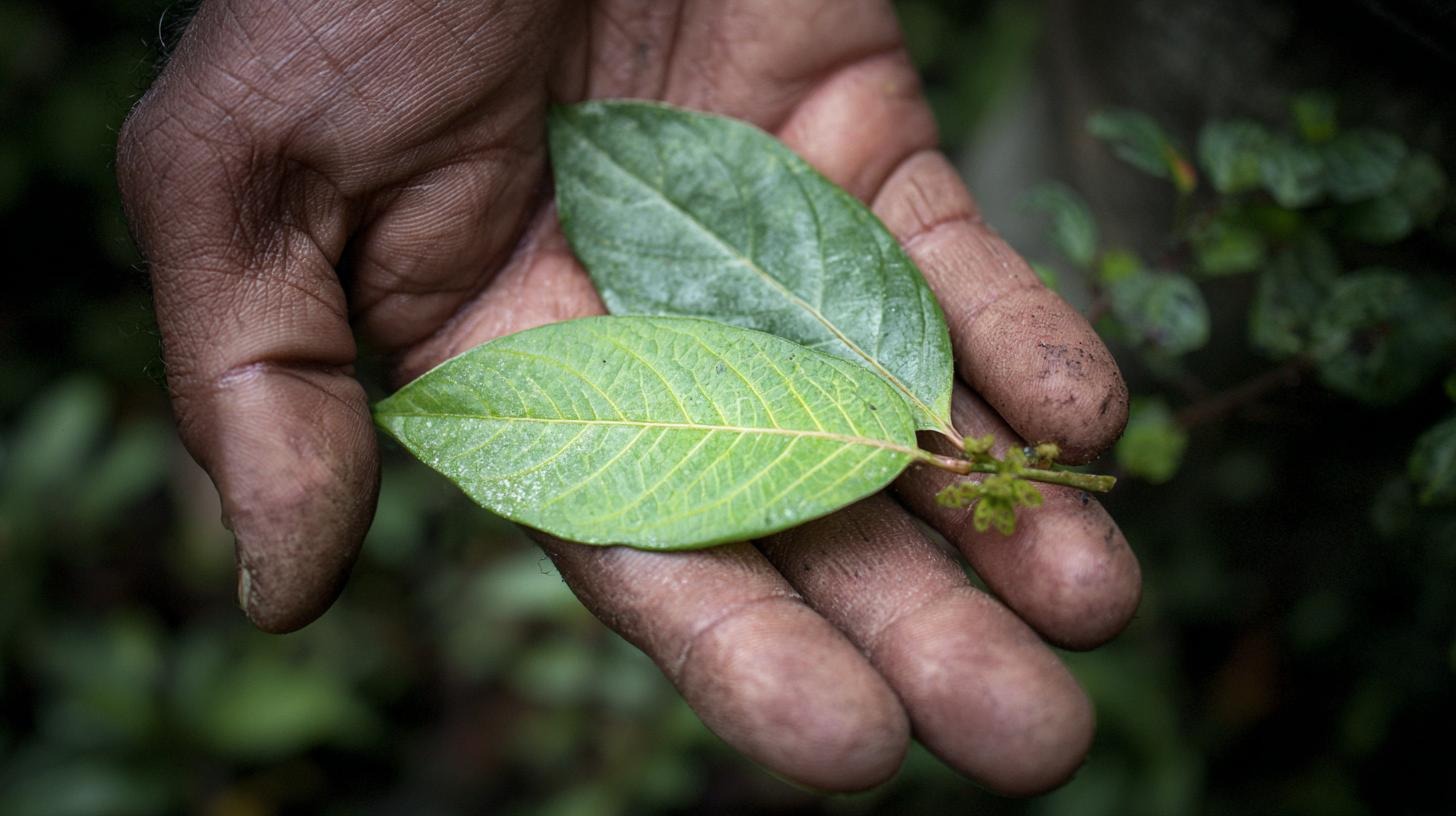
The World Health Organization (WHO) has concluded one of the most significant processes in recent years in the field of international drug policy: the critical review of the coca leaf. The result confirms its continued classification in Schedule I of the 1961 Single Convention, the most restrictive level of the international control system. The recommendation, issued by the Expert Committee on Drug Dependence (ECDD), thus consolidates a framework that many actors considered susceptible to correction after decades of scientific, legal, and cultural questioning.
The outcome transcends technical considerations. For broad academic, community, and institutional sectors, the decision represents a missed opportunity to repair historical damage: the international criminalization of a plant with traditional, cultural, and medicinal uses deeply rooted in the Andean-Amazonian region, incorporated into the global drug regime in a context marked by colonialism and the exclusion of the communities directly affected.
Madrid opened the debate in Europe
Against this backdrop, ICEERS promoted a high-level briefing in Madrid, organized together with TNI, with the aim of placing the review process in the European debate and analyzing its possible implications from a public health, human rights, and scientific evidence perspective. The meeting brought together diplomatic representatives, international organizations, and civil society, and allowed us to anticipate a tension that has now been confirmed: the contrast between the content of the scientific analysis and the rigidity of the inherited regulatory framework. At this event, it was already warned that if the committee interpreted its mandate narrowly, the human rights and reparation dimension would be relegated, and the CND would be able to do little more than vote yes or no on a recommendation that was already closed.
The discussions held in Madrid underscored the political relevance of the process and the need to interpret its results beyond a technical exercise. It was highlighted that the WHO’s critical review not only assessed pharmacological risks, but also served as a test of the international drug system’s consistency with available scientific evidence, human rights commitments, and recognition of the traditional uses of the coca leaf. With the ECDD’s final recommendation now known, this debate takes on a new dimension and allows us to assess the extent to which the current framework continues to reproduce historical inertia that is difficult to justify from a contemporary perspective of public health and social justice.
The decision: continuity without correction
The WHO recommendation was formalized in a letter from the Director-General to the Secretary-General of the United Nations, expressly stating that coca leaf should remain in Schedule I of the 1961 Convention. The official summary of assessments and recommendations of the 48th ECDD reaffirms this conclusion after reviewing the available scientific literature.
From a legal standpoint, Schedule I groups together substances whose “potential for abuse” is considered a particularly serious risk to public health and whose therapeutic value is limited or non-existent. Keeping coca leaf at this level means reaffirming its inclusion in the most punitive core of the international control system, even though the scientific review itself introduces relevant nuances regarding its risk profile.
The WHO has publicly stated that this framework would allow traditional uses to continue in countries where they are recognized, while strengthening controls to prevent diversion to cocaine production. However, this statement coexists with a regulatory architecture that continues to project a presumption of structural danger onto the leaf.
What the scientific evidence says
The technical report underpinning the critical review offers a more complex reading than the final result suggests. In the section on public health, the review concludes that the literature examined reveals no evidence of clinically relevant harm to public health associated with the traditional use of coca leaf. At the same time, the document itself acknowledges the existence of substantial impacts linked to the control policies historically applied to coca.
With regard to dependence and abuse, the executive summary indicates that the available ethnographic studies do not link traditional coca leaf consumption with a significant potential for dependence, although it warns that concentrated extracts, administered in high doses, can produce effects comparable to those of cocaine in animal models.
The review also includes preliminary lines of research that point to possible pharmacological properties of interest—such as antioxidant, anti-inflammatory, or neuroprotective effects observed in preclinical studies—noting their potential relevance for future developments, provided that their efficacy and safety in humans are rigorously established.
Overall, the report does not present a picture of absolute safety or propose a total absence of risks. However, it does describe a profile that differs considerably from one that would justify, from a strictly health-based perspective, its continued inclusion in the most restrictive category of the treaty.
In parallel with the documents from the Geneva process, recent analyses have circulated that focus specifically on traditional use in Colombia, systematizing forms of consumption and reviewing the available literature on safety conditions in these contexts. This type of work is relevant because it shifts the focus to the field—practices, cultural regulation, and health realities—precisely the level that the international regime has tended to render invisible when it equates coca leaf with cocaine.
The decisive criterion: convertibility to cocaine
The final recommendation is based primarily on a legal-technical criterion that has shaped the control of the coca leaf since its inception: convertibility.
The ECDD documents recall that, under the 1961 Convention, a substance may be subject to strict control if it is readily convertible into another substance already under control. In this case, the committee emphasizes that the leaf contains cocaine as a natural alkaloid and that its extraction and refinement can be carried out through processes considered direct and accessible, which would fit this criterion.
Added to this argument is the global context of the illicit cocaine market. The committee refers to the increase in coca cultivation and the rise in global cocaine production, placing its recommendation within a preventive logic geared toward global public health.
The result thus shifts the focus from the uses and effects of the leaf in its traditional form to its role as a raw material in a transnational illicit production chain. This conceptual shift explains, to a large extent, why the scientific review does not translate into a change in legal status.
Geneva spoke of reparation
Before the final deliberations, a public information session of the ECDD was held in Geneva on October 20. At that meeting, various States and agencies, as well as representatives of civil society, spoke to emphasize that the review of the coca leaf could not be limited to a pharmacological evaluation.
The Office of the United Nations High Commissioner for Human Rights explicitly stated that the process offered an opportunity to address a historical injustice resulting from the criminalization of cultural practices without the participation or consent of the indigenous peoples affected. It insisted on the need to incorporate human rights approaches, effective participation, and free, prior, and informed consent.
This call for redress pointed to a structural dimension of the international drug regime: its consolidation in a period prior to the development of contemporary instruments for the protection of indigenous peoples’ rights and the recognition of cultural diversity.
The origin of the damage
The historical review included in the ECDD documentation recalls that the classification of the coca leaf was based largely on the report of the Commission of Inquiry on the Coca Leaf of 1949–1950, and that since then no comprehensive assessment of coca chewing had been carried out by the WHO.
The 1961 Single Convention even went so far as to require the abolition of coca leaf chewing within 25 years of its entry into force, a provision that is difficult to reconcile with current standards of cultural rights and self-determination.
The consequences of this framework have lingered for decades: stigmatization, obstacles to research, criminal prosecution, and social and environmental damage associated with eradication and control strategies.
A postponed repair
With the ECDD’s recommendation already transmitted, and in the absence of a proposal for change, the Commission on Narcotic Drugs will have no scope to discuss a reclassification of the coca leaf in this cycle. The recommendation also comes at the end of a year marked by visible tensions in global drug governance: debates increasingly dominated by security concerns, dwindling resources, and difficulties in consistently integrating human rights commitments. At the same time, the rhetoric of “narco-terrorism” is reappearing as a discursive shortcut to reduce complex issues to threats and militarized responses—a drift that various organizations have been pointing out with concern. The WHO has announced the publication of a consolidated technical report in early 2026, which will allow for a more detailed analysis of how the available evidence on the coca leaf was weighed.
For now, the result leaves an uncomfortable conclusion: even when a scientific process recognizes low dependence, the absence of clinically relevant harms associated with traditional use, and potential therapeutic interest, the international system may choose to preserve a classification constructed in another time and under other logics.
The coca leaf thus remains caught between its ancestral and everyday uses and the global cocaine economy. The reparation demanded in Geneva—and also pursued in Madrid when this debate was opened in Europe—has once again been postponed.
At ICEERS, we will continue to contribute to this debate with analysis, evidence, and a human rights approach that will one day make it possible to correct an injustice that the system itself already recognizes, even if it does not yet dare to remedy.
Categories:
NEWS
, HUMAN RIGHTS
Tags:
United Nations
, coca
, World Health Organization
, Colombia
, Bolivia
, hoja de coca