
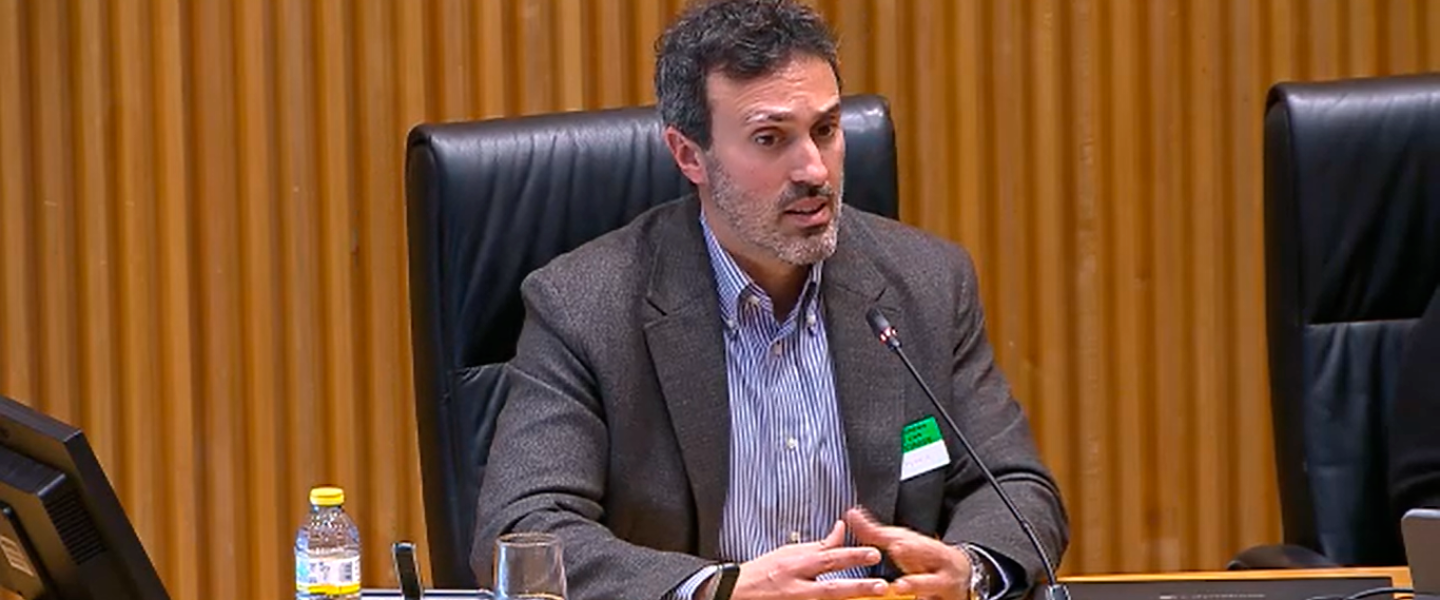
On February 13, 2026, the Ernest Lluch Chamber of the Congress of Deputies hosted Spain’s first parliamentary conference dedicated to psychedelic-assisted psychotherapies. For four hours, the Spanish Parliament made room for a conversation that, until a few years ago, had little place in institutional settings. The event, promoted by the Inawe Foundation and the Spanish Society of Psychedelic Medicine, brought together clinicians, researchers, and representatives from the regulatory sphere with a clear purpose: to bring to the heart of the legislative process a debate that is already taking place in hospitals, universities, and health agencies in various countries.
The discussion took place in a context marked by growing pressure on mental health systems. For years, official figures have reflected a high prevalence of diagnoses related to depression, anxiety, adjustment disorders, and problematic substance use. In this scenario, psychedelic-assisted therapies have gained visibility as a line of clinical research, following a structured therapeutic model that integrates prior assessment, psychological preparation, supervised sessions under controlled conditions, and subsequent integration. Within this framework, the substance plays an instrumental role in a complex clinical process that requires specific training, clear protocols, and rigorous ethical safeguards.
The program’s structure outlined a comprehensive itinerary: scientific evidence, clinical experience, comparative regulatory models, and specific challenges for Spain. The conference opened with presentations by Dr. Elisabet Domínguez Clavé, coordinator of PsychedeliCare in Spain, and Carlos Alonso, president of the Inawe Foundation. The opening set the stage for a debate at the intersection of clinical research, real suffering, and public responsibility. The discussion did not focus on cultural trends, but rather on mental health, evidence, and the need to rigorously examine these tools. Domínguez Clavé emphasized that the debate is not about deregulation, but rather about responsible regulation that allows for better research, protects patients, and provides legal certainty for professionals.
Scientific evidence and safety
The first panel addressed a question as basic as it was decisive: “What do we know about these substances?” Moderated by Dr. Genís Oña, who was part of the ICEERS scientific team for many years, the program offered a deliberately structured overview, from the cellular and molecular to the clinical. The aim was not to import conclusions from elsewhere, but to show that, in Spain, research has been conducted for years from different perspectives and with its own trajectory.
With this as the common thread, Dr. Juan López (CSIC), Dr. Margarita Moreno (University of Almería), and Dr. Luis Caballero took part in the discussion. The panel focused on the verifiable: preclinical models, biomolecular reading of mechanisms, and clinical evaluation under controlled conditions. The framing emphasized the need to distinguish between promises, hypotheses, and findings, and the importance of not confusing an emerging field with a territory without method.
In his presentation, Juan López placed the “psychedelic renaissance” in a historical sequence: ancestral knowledge, scientific boom in the 20th century, decades of restriction, and, in recent years, a resurgence motivated by observed results in mental health and a notable increase in publications. He also raised a key element for clinical discussion: in resistant depression, significant improvements have been reported after one or a few doses, with a sustained effect lasting for weeks or even months, a profile that forces us to think not only about the acute effect, but also about long-range changes.
From this basis, López explained that classic psychedelics act primarily through the serotonin 5-HT2A receptor and linked the potential therapeutic effect to the hypothesis of neural plasticity: the ability to reorganize synaptic connections. He also introduced an ongoing controversy in the field, with regulatory and clinical implications: whether sustained therapeutic effect necessarily requires the subjective experience induced by the psychedelic, or whether compounds with neuroplastic impact could be developed without psychoactive effects. On that point, his conclusion was prudent: mechanistic evidence is advancing, but more work is needed before the discussion can be closed.
Overall, the panel outlined a rigorous framework: research is progressing, but it demands standards, replicability, and follow-up, and requires caution when translating results into health policy decisions. The conversation moved away from speculation to emphasize that any steps toward clinical implementation must be supported by data, solid methodologies, and an honest assessment of the current limits of knowledge.
Clinical efficacy
The second panel addressed the clinical heart of the debate: “Clinical efficacy: how does psychedelic-assisted therapy work and what do patients say?”, moderated by psychiatrist Santiago Madero. Marc Aixalà, clinical psychologist, author, and member of ICEERS, with extensive experience in the integration of psychedelic experiences and professional training, spoke at this panel.
His intervention introduced a decisive conceptual shift. The focus of the process was not on the substance or the therapist, but on the person’s experience. Aixalà argued that this model combines pharmacotherapy and psychotherapy within an approach that is genuinely centered on the person undergoing the process. The therapist does not “produce” the cure: they facilitate conditions for the internal work to unfold safely. “Perhaps one of the most beautiful things about this therapeutic approach is that it combines pharmacotherapy, psychotherapy, and a patient-centered approach,” he said.
Psychedelic-assisted therapy, he emphasized, does not consist of the isolated application of a drug, but rather a clinical architecture in which substance, psychotherapeutic process, and subjective experience interact inseparably. Aixalà drew attention to something revealing: when people describe their process, they rarely talk about the specific professional or the specific molecule. “The focus is on the patient and the patient’s experience,” he said. This centrality implies a profound change in the therapeutic role. “The role of the therapist is more that of a person who accompanies a process and facilitates it, rather than being the doer or the person who takes the lead and directs the patient’s healing.”
Marc pointed out that this intervention is not equivalent to “open-heart surgery”—it does not require complex surgical techniques—but it does “require specific training in order to support these processes satisfactorily.” Specific training, therefore, is not an accessory, but a structural requirement.
In relation to integration, Aixalà specified that the psychotherapeutic model associated with these interventions “are not directive psychotherapies in which the patient is told what to do.” Rather, they are processes that “allow the person to find their own internal resources.” The emphasis is on agency and the recovery of abilities, not on the imposition of external itineraries. He also addressed an issue that often arises in testimonies from long clinical careers: paternalism. He pointed out that many people with resistant disorders report feeling treated “in a paternalistic way by the medical system.” In response to this dynamic, he advocated an approach that combines respect and support without condescension.
Finally, he introduced a structural warning that transcends individual technique: “It is not just a matter of having the substances available or legalized, but of having an infrastructure of professionals who know how to intervene.” The responsible advancement of these therapies, therefore, does not depend solely on regulatory decisions, but on trained teams, clear protocols, and continuity of care.
At the same table, psychiatrist Óscar Álvarez provided a complementary technical framework by emphasizing the importance of context—the well-known “set and setting” binomial—and the role of the therapeutic bond as a predictor of clinical response. Accompaniment did not appear as an accessory, but as a central component of safety and efficacy.
Likewise, a first-person testimony swept through the room with an emotional charge that was difficult to contain. This person, who prefers to remain anonymous, recounted their experience of more than two decades of resistant depression, of a life that went on “without flavor,” of motherhood lived with guilt and progressive isolation. She spoke of a life lived “without pain or glory,” of constant anxiety “here, in my chest,” and of nights when she went to bed “wishing I wouldn’t wake up the next day,” trapped in a recurring thought: “I wanted to die.” Therapy helped her cope and medication cushioned the extremes, but the suffering remained, chronic, eroding bonds and meaning.
Her participation in a clinical trial of psychedelic-assisted psychotherapy with 5-MeO-DMT marked a turning point. During the experience, the patient described a sense of belonging and connection that replaced the persistent emptiness, the release of constant physical anxiety, and a “change of filter” in the way she perceived reality. It was a direct appeal to public officials: accepting the chronicity of suffering as an inevitable fate, with ongoing research and promising results, seemed morally unacceptable to her.
International regulation
After a break, the conference moved on to comparative regulatory models. The panel, moderated by Antón Gómez-Escolar, featured Dr. Todd Korthuis (Oregon Health & Science University) and, due to a last-minute cancellation, did not include German doctor Andrea Jungaberle, who was going to present the German case—with a special focus on psilocybin in treatment-resistant patients—but was unable to travel. The introduction set out a clear framework: the starting point was not “substances that come out of nowhere,” but compounds subject to strict international control and, even so, with legal scope for medical and research uses when “very well-controlled” conditions exist.
Gómez-Escolar recalled that classic psychedelics are listed in Schedule 1 of the 1971 Convention on Psychotropic Substances, with practical implications that make clinical and scientific work more expensive and difficult: custody requirements, logistical barriers, limited pharmaceutical suppliers, and bureaucracy that, in practice, slows down the generation of evidence. At the same time, he highlighted the two exceptions that have allowed the field to resurface: authorization for research and medical purposes, as well as some exceptions linked to traditional uses in certain regions.
In this context, several ways to move forward without breaking the international framework were presented: from eventual reclassification—via the WHO and the United Nations Commission on Narcotic Drugs, along with national adaptations—to mechanisms already in place, such as special access programs, compassionate use models, and supervised schemes that allow for institutional learning while the conventional route of drug approval continues. It was emphasized that the classic route—preclinical and phases 1, 2, and 3—is long and costly, and that, in the meantime, some countries are opening regulated doors to respond to urgent needs and, at the same time, accumulate clinical experience, train professionals, and collect data.
Todd Korthuis brought that debate down to earth with the example of the United States. He explained that regulated access to psilocybin services arose, in part, from public interest and legislative initiatives: Oregon approved the first in 2020, followed by Colorado in 2022 and New Mexico in 2025, while other states are considering similar proposals. In Oregon, the program is overseen by the Health Authority and combines licensed producers, certified laboratory testing, and authorized centers where administration always occurs in a supervised session—with no possibility of “taking the dose home”—with facilitators who provide non-directive support and prepare the client before the session.
The panel focused on verifiable aspects: data, monitoring, and safety mechanisms. Korthuis estimated that some 15,000 people have received regulated services since 2023 in Oregon, and presented OPEN, a non-commercial longitudinal project to document experiences and outcomes over several months. Initial findings showed few serious, though relevant, incidents and improvements in symptoms of depression, anxiety, and trauma at one- and three-month follow-ups, along with increases in well-being and life satisfaction. During the question and answer session, a crucial point was clarified: this is a non-medical setting, and the panel emphasized the need for specific safeguards—mandatory training, incident reporting, clear limits on consent and contact, and follow-up—precisely to maintain safety and quality in supervised access models.
Opportunities and challenges for Spain
The last panel addressed the inevitable question: what would progress in Spain entail? Moderated by Dr. Óscar Soto Angona, it brought together Dr. Rosa María Dueñas (Sant Joan de Déu Hospital), Dr. Manuel Ángel Franco, Maria de Valles, Maria Eugenia Martín, and Dr. Narcís Cardoner, among others. Research challenges, funding needs, regulatory fit, and guarantees of safe clinical access were discussed. The conversation made it clear that the challenge is not only to authorize a tool, but to integrate it into a healthcare system that aspires to equity, quality, and sustainability.
At the last table, the debate turned to the practical question: how to move forward in Spain without upsetting the balance of a public system that aspires to universality. Several speakers pointed to the tension between personalized medicine and clinical guidelines based on standardized evidence, warning that, beyond the statistics, there is “a certainty that there are patients who make a full recovery,” even after “10, 15 years of being stuck… with a high risk of suicide.” Based on this premise, the possibility of access “even if only for compassionate use” was defended, along with more research to refine profiles and criteria.
The conversation then turned to the variable that slows down almost everything: money. It was pointed out that even drugs approved by the European Medicines Agency may not be used in Spain due to cost and time constraints, and the managerial logic was described with a blunt phrase: “the least expensive unit is the one that does not exist.” Even so, it was suggested that the economic balance could favor these therapies when comparing decades of chronic treatment with brief interventions, and that international cost-benefit studies already point to favorable results.
Risks and conditions were also highlighted: “uncritical use” outside clinical contexts can cause harm and discredit the field. Implementation would require healthcare reorganization, specific training, and real equity: ensuring that access does not depend “on your genetic code, but on your zip code.” Without public funding for independent research—capable of overcoming “ideological… dogmatic aspects”—knowledge would remain in the hands of partial interests and key questions would remain unanswered.
At the close, the organizers emphasized a twofold challenge: rigor and security, together with informed political and social dialogue. Carlos Alonso summed up the spirit of the day with a phrase that resonated throughout the room: “It is a matter of deliberating rigorously today so as not to improvise tomorrow. The question is not whether the debate should be opened. The question is whether we are willing to bear the cost of not doing so.”
Beyond the event
This conversation did not close the debate: it opened it in parliament. And it left a cross-cutting idea: any progress in this area must be anchored in an ethic of care that places the person — with their biography, vulnerability, and autonomy — at the center. Without rigorous training, clear frameworks, and protection of rights, innovation is empty. With these in place, the conversation can evolve into a serious analysis of how to reduce suffering in contexts where current tools are not always sufficient.
The parliamentary debate did not resolve questions, but it did open up a different institutional arena. When the legislature pays attention to an emerging field with a vocation for technical analysis and ethical prudence, the focus of public conversation shifts. It is no longer a question of polarizing between enthusiasm and alarm, but of rigorously questioning what conditions would allow—or not—the integration of certain therapeutic models into a healthcare system that aspires to equity, quality, and responsibility.
The conference left one thing clear: the conversation about psychedelic-assisted therapies has moved beyond the periphery. The challenge now lies in sustaining the debate with depth, data, and an ethic of care that places people, their contexts, and their rights at the center.